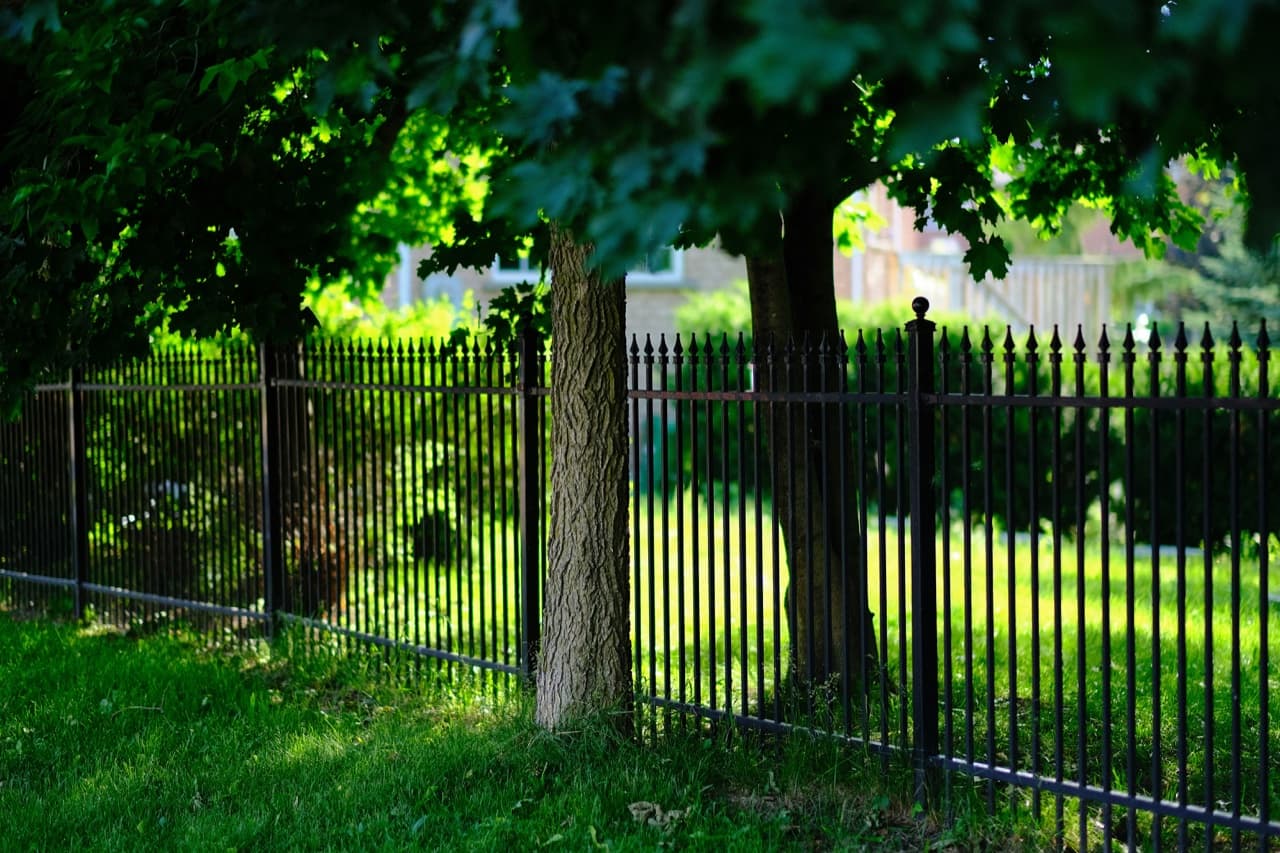
About aluminum and iron fence installation
Powder-coated aluminum and wrought iron. Ornamental and pool-compliant.
Ornamental fencing for entry gates, pool surrounds, and decorative perimeter. Powder-coated aluminum is the workhorse and meets NJ pool barrier code spacing rules naturally. Wrought iron is the upgrade for historical homes that already carry iron on the property.
Where this category fits
These materials live in a different category from wood, vinyl, and chain link. They're ornamental. Vertical bars with space between them. You can see through them. They read as a fence on purpose, architecturally, rather than a privacy device.
Common use cases:
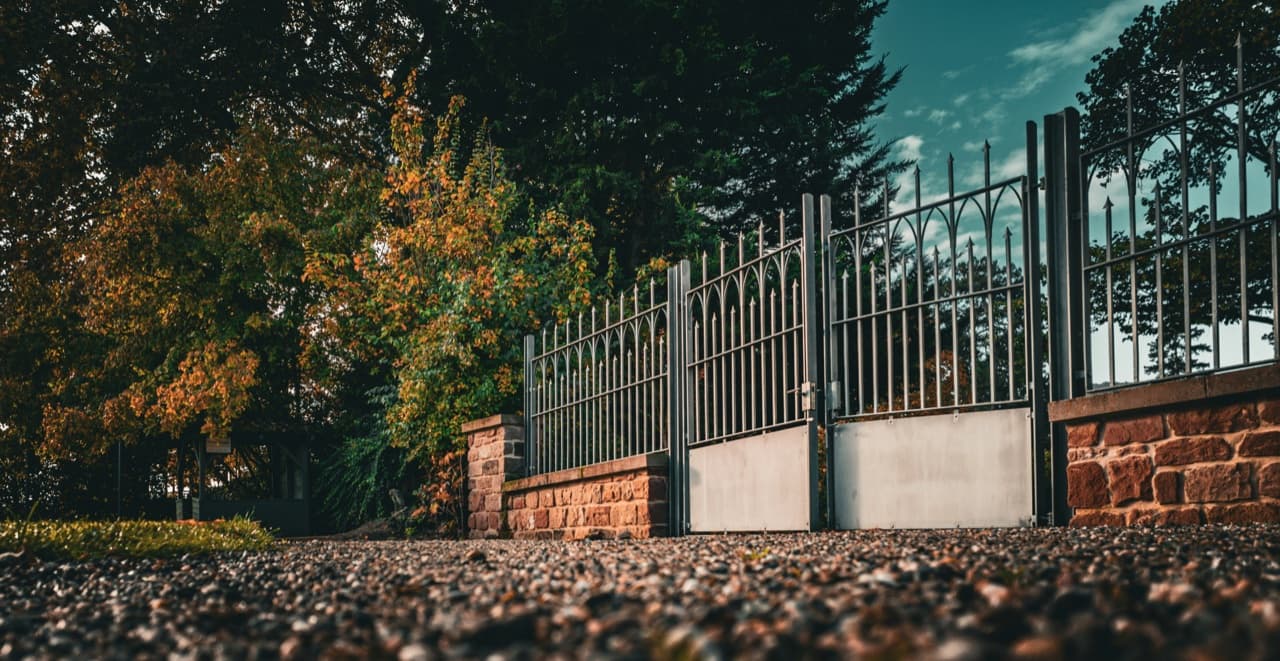
- Entry gates and driveway pillars. a wood or vinyl gate at a long driveway reads as utilitarian. Aluminum or iron reads as a feature.
- Pool surrounds. vertical-bar designs naturally meet NJ pool barrier code spacing rules. The most common pool fence material in Union County.
- Front-yard ornamental. older neighborhoods in Westfield, Cranford, Plainfield, and Summit carry a lot of wrought-iron front-yard fencing because the historical aesthetic calls for it.
- HOA-driven aesthetics. some Union County developments require aluminum or iron in specific zones.
Aluminum or iron, and why
Most installs these days go aluminum. It's about a third the weight of wrought iron, doesn't rust, and the powder-coat finish lasts decades without you touching it. Black, bronze, and white are the standard finishes.
Wrought iron is the heavier, real-deal version. Forged or welded steel, heavier construction, harder hardware. The trade-off is upkeep. Iron rusts. You need to repaint or rust-treat every few years to keep it looking right. Lifespan is excellent if you keep up with maintenance, marginal if you don't.
Pick wrought iron if you have a historical home, iron fencing already on the property that needs matching, or a specific aesthetic that aluminum can't quite hit. Pick aluminum for almost everything else.
There's also a middle option: powder-coated steel tubing. Heavier than aluminum, lighter than wrought iron, used mostly for security perimeter where strength matters but cost rules out genuine iron.
When this is the wrong category
A few situations where ornamental fencing is not the right call:
- You want full privacy. Vertical-bar designs are see-through by definition. If privacy is the goal, you're shopping wood or vinyl.
- You're fencing a long perimeter on a budget. Aluminum and iron run higher per linear foot than wood or vinyl. Sensible for entry features and pool surrounds, expensive for 300 feet of backyard perimeter.
- You're in a kid-and-pet phase and the fence doubles as a containment barrier. Vertical bars with 4-inch spacing keep most pets in but don't slow toddlers down the way a solid panel does.
What residential installs usually look like
- Pool-rated aluminum. 4 to 5 feet tall, code-compliant vertical-bar spacing, self-closing and self-latching gate hardware.
- Residential ornamental. 3 to 6 feet, gates and decorative pickets, used for front-yard or boundary aesthetics.
- Driveway gates. manual or automated. Custom width based on driveway opening.
- Historical iron restoration. custom forge work for sections matching existing iron on older homes.
Union County permit and code
Permit rules follow the standard Union County baseline. Over 4 feet usually requires a permit. Front-yard fences typically cap at 4 feet. Pool-adjacent aluminum has additional NJ pool barrier code requirements covered on the Pool Fence Installation page and the NJ Pool Fence Code Guide.