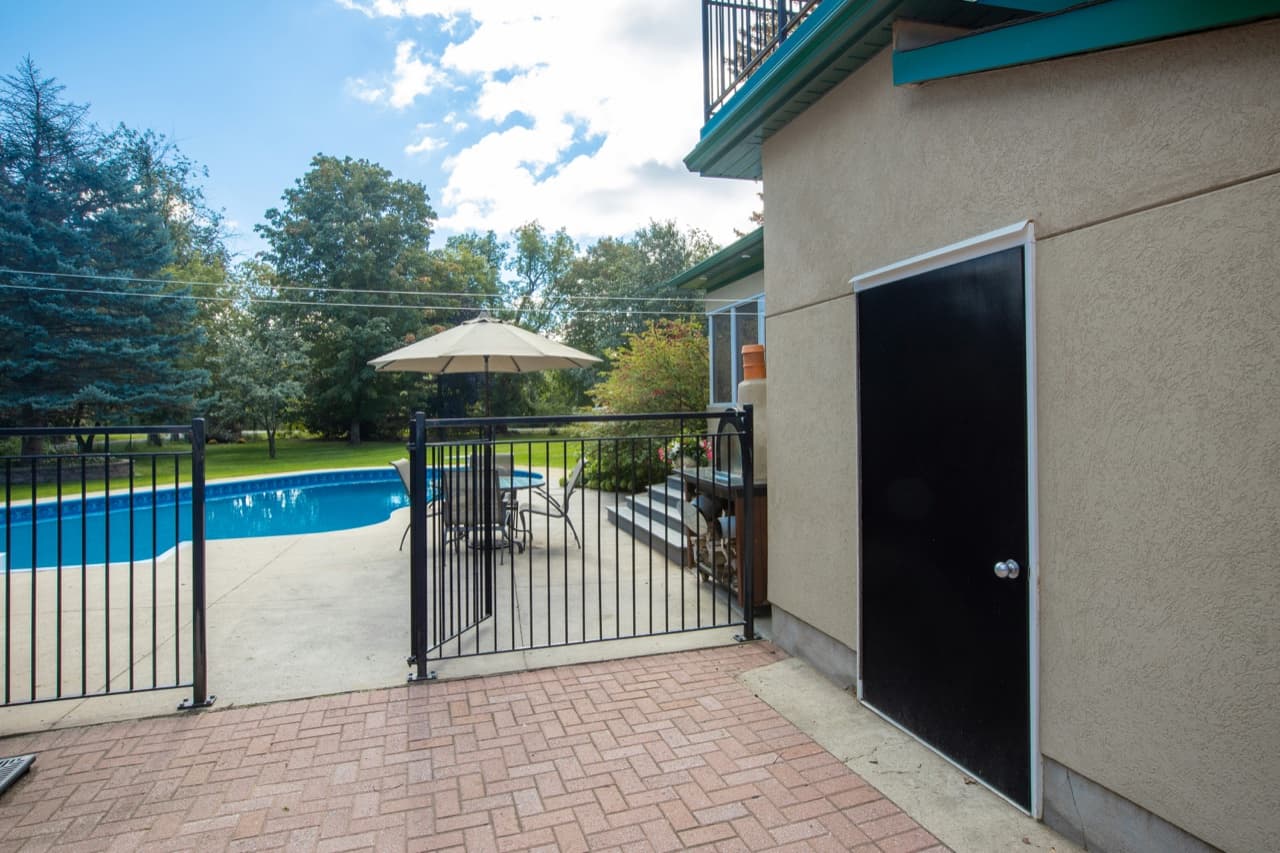
About pool fence installation
Code-compliant per NJ pool barrier law. Permanent ornamental or removable mesh.
NJ law requires a code-compliant barrier around every in-ground pool. Powder-coated aluminum and removable mesh dominate the category, both meeting state pool barrier code when installed correctly. Permits and inspection scheduling handled.
What NJ pool barrier code actually says
Pool fencing in NJ isn't optional. State code (adopted from the International Residential Code) requires a barrier around every in-ground pool, and the rules are specific enough that many older fences in Union County no longer meet them. The basics:
- 48 inches minimum height. measured from grade.
- Maximum 4-inch gap. between the bottom of the fence and the ground.
- Vertical-member spacing. that prevents a 4-inch sphere from passing through.
- Self-closing, self-latching gates. with the latch positioned at least 54 inches above grade.
- No climbable features. on the pool side of the fence.
The three situations that drive most pool fence calls
If you're in any of these three, what you need is a pro who's filed pool fence permits in your town before. The code is fairly uniform across NJ, but town inspectors vary in how they check and what they prioritize.
- New pool install. the pool builder finishes the pool, and the town inspector requires a code-compliant barrier before the pool gets a final use permit.
- Real-estate sale. a pre-listing or pre-closing inspection flags the existing pool fence as non-compliant. Common with pools installed before NJ adopted current barrier code.
- Code update or town inspection. a fence that was compliant when it went in no longer meets current rules. Less common, but it happens, especially with older mesh or wood configurations.
The three materials worth quoting
Powder-coated aluminum. The most common pool fence material in Union County. Vertical-bar designs hit code spacing rules naturally. Black, bronze, or white finish. 30+ year lifespan with no maintenance after install.
Removable mesh. Polyester mesh stretched between aluminum posts that drop into ground sleeves. NJ-code-compliant when installed correctly. The big draw is removability. Posts come out when the pool is closed, sleeves stay flush with the deck or grass, and the pool area opens up off-season. Common with families who don't want a permanent visual barrier around the pool year-round.
Integrated property fence. If you're already planning to replace your perimeter fence, certain configurations of vinyl picket or aluminum can serve as both property fence and pool barrier. Possible but narrow. The geometry has to work and the gate hardware has to meet code on its own.
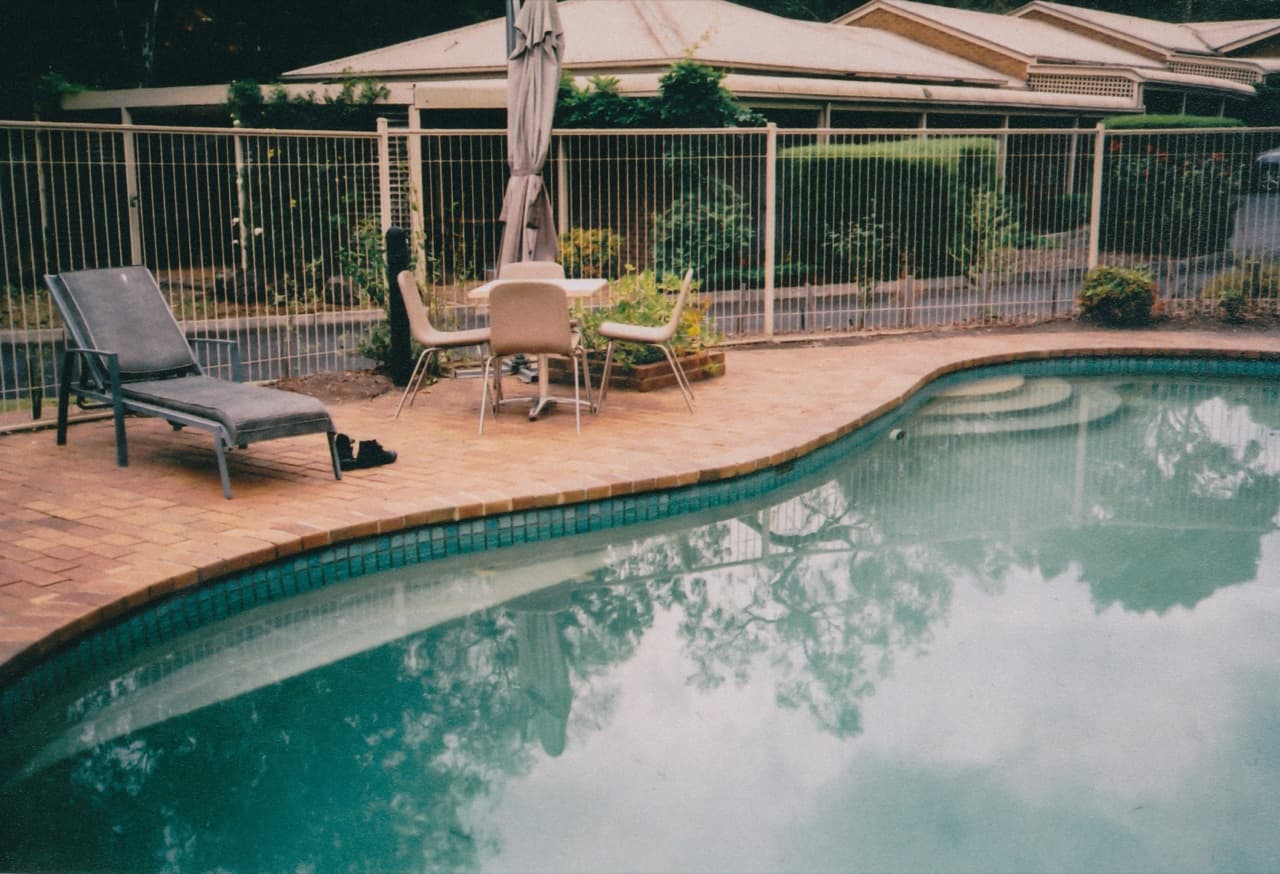
Pool fence work that is more urgent than people realize
A few situations where pool fence compliance moves up the priority list:
- You bought the house with an existing pool. Town inspections do not happen automatically. The fence might have been grandfathered in or never properly compliant, and a new owner is the natural time to verify.
- You added decking or landscaping near the pool. New climbable features adjacent to the fence can invalidate compliance even if the fence itself didn't change.
- Your gate hardware is showing wear. Self-closing and self-latching mechanisms tend to fail before the fence itself does. A non-self-closing gate is the single most common code violation we see.
Permits and inspection
Every Union County pool fence install requires a permit and a town inspection. There's no exception for "small" or "temporary" installs once a pool is in the ground. The pro pulls the permit and schedules the inspection.